Hey there, fellow energy enthusiasts! It’s incredible to think about how far we’ve come in harnessing the wind, isn’t it? I remember when wind turbines seemed like something out of a futuristic movie, and now they’re a vital part of our landscape, silently (mostly!) spinning away, powering our lives.
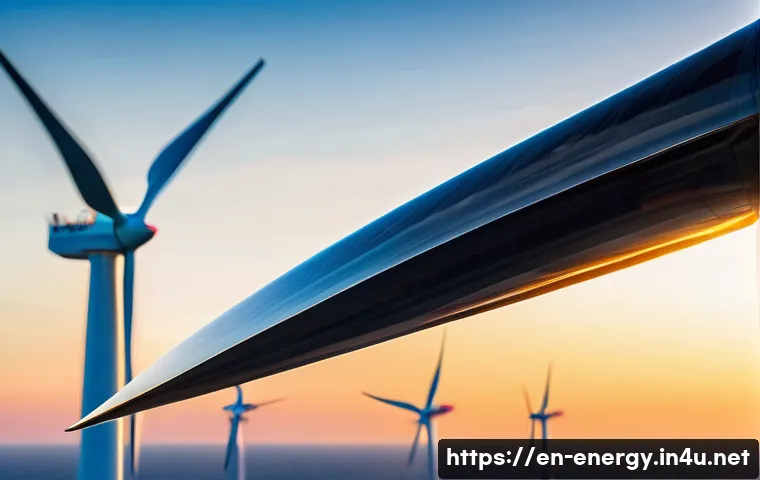
But have you ever stopped to truly appreciate the sheer engineering marvel that is a wind turbine blade? It’s not just about making a big fan; it’s a delicate dance between physics, materials science, and cutting-edge design that constantly pushes boundaries.
We’re seeing some truly revolutionary ideas emerging, from advanced composite materials that are lighter and stronger, to smarter blade designs that can adapt to changing wind conditions in real-time.
It’s a game-changer for efficiency and sustainability, and frankly, it’s thrilling to watch these innovations unfold. I’ve personally been following the developments in flexible blades and even designs inspired by nature – think whale fins!
These aren’t just incremental improvements; they’re leaps forward that are making wind power even more competitive and reliable. The future of clean energy really does depend on these brilliant minds tackling the intricate challenges of wind turbine blade design.
It truly feels like we’re on the cusp of an energy revolution, and understanding the core components, like these magnificent blades, is key to appreciating it all.
If you’ve ever wondered what goes into creating these giants that help power our world, you’re in for a treat. Let’s dive deep into the fascinating world of wind turbine blade design and uncover the secrets behind their incredible power.
We’re going to explore what makes them tick, and what exciting innovations are just around the corner, so let’s get into the nitty-gritty and truly understand the magic behind the spin!
The Unsung Heroes of Green Energy: A Deep Dive into Blade Anatomy
Honestly, when I first started getting into renewable energy, I just thought a wind turbine blade was, well, a big fan blade! But oh, how wrong I was. After spending some time researching and even visiting a few wind farms (which was an incredible experience, by the way!), I quickly realized these aren’t just simple propellers. They are intricate marvels of engineering, designed with a level of precision that would make aerospace engineers nod in appreciation. Each blade is a complex structure, not just a solid piece of material. It’s a carefully crafted system of layers, supports, and internal structures all working in perfect harmony to capture as much energy as possible from the wind. It’s truly fascinating to see the sheer scale up close, and how something so massive can be so elegantly designed to move with the air.
More Than Just a Propeller: The Blade’s Complex Structure
Think about an airplane wing; a wind turbine blade shares many of those sophisticated aerodynamic principles, but often on a much grander scale. Inside, these blades are typically hollow, or filled with a lightweight core material, reinforced by structural spars that run their entire length. This design is crucial because it gives the blade immense strength to withstand powerful wind gusts and constant rotational forces, yet keeps it light enough to spin efficiently. I remember reading about how early blade designs often suffered from fatigue, and seeing how far the structural engineering has come is just mind-blowing. The leading edge, which is the front part that cuts through the air, and the trailing edge, where the air flows off, are meticulously shaped to optimize airflow. Then there’s the root, the part that connects to the hub, which has to handle incredible stresses. It’s a testament to human ingenuity to balance all these demands.
The Core of the Matter: Why Size and Shape Truly Count
It’s not just about making a blade big; it’s about making it *smart*. The length of the blade directly impacts the amount of wind energy a turbine can capture – longer blades mean a larger swept area and thus more power. But there’s a sweet spot, because longer blades are also heavier, more expensive to manufacture, and harder to transport. And the shape? Oh, that’s where the magic really happens. Each part of the blade, from the slender tip to the broader root, has a specific airfoil profile that changes along its length. This twist, known as “blade twist,” ensures that the blade extracts maximum energy from the wind at every point, regardless of how fast the tip is moving compared to the root. My personal take is that this subtle twist is one of the most brilliant aspects of modern blade design, making them far more efficient than any static, flat propeller ever could be. It’s a dynamic ballet with the wind, optimized for peak performance.
Crafting the Giants: Materials and Manufacturing Miracles
Building these colossal blades is an art form in itself, blending traditional craftsmanship with cutting-edge technology. The materials chosen are absolutely critical, not just for strength and durability, but also for weight and manufacturing feasibility. I’ve always been amazed by how engineers can create structures that are both incredibly robust and surprisingly light. Imagine trying to lift something the length of a football field – now imagine it needs to spin constantly for decades! It’s a challenge that demands the best in materials science. The evolution of these materials has been a constant journey, always seeking that perfect balance of performance, cost, and environmental footprint. What we see today is the culmination of decades of research and development, and it truly shows in the reliability and efficiency of modern turbines. It’s not just about what you build, but what you build it *with*.
From Fiberglass to the Future: The Evolution of Blade Materials
For a long time, fiberglass composites have been the go-to material for wind turbine blades, and for good reason. They offer an excellent strength-to-weight ratio and are relatively cost-effective to produce. However, as turbines have grown larger and demand for even greater efficiency has increased, engineers have been exploring more advanced composites. We’re now seeing carbon fiber gaining traction, often used in conjunction with fiberglass in hybrid designs. Carbon fiber is significantly stronger and stiffer than fiberglass, allowing for longer, lighter blades that can capture more wind without compromising structural integrity. I even heard about some experimental designs incorporating basalt fiber, which is another exciting avenue. The challenge with these advanced materials often comes down to cost and scalability, but the benefits in performance and longevity are undeniable. It’s a continuous push towards lighter, stronger, and more sustainable options, and frankly, it’s thrilling to watch.
Precision in Production: How These Marvels Are Made
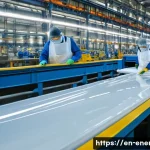
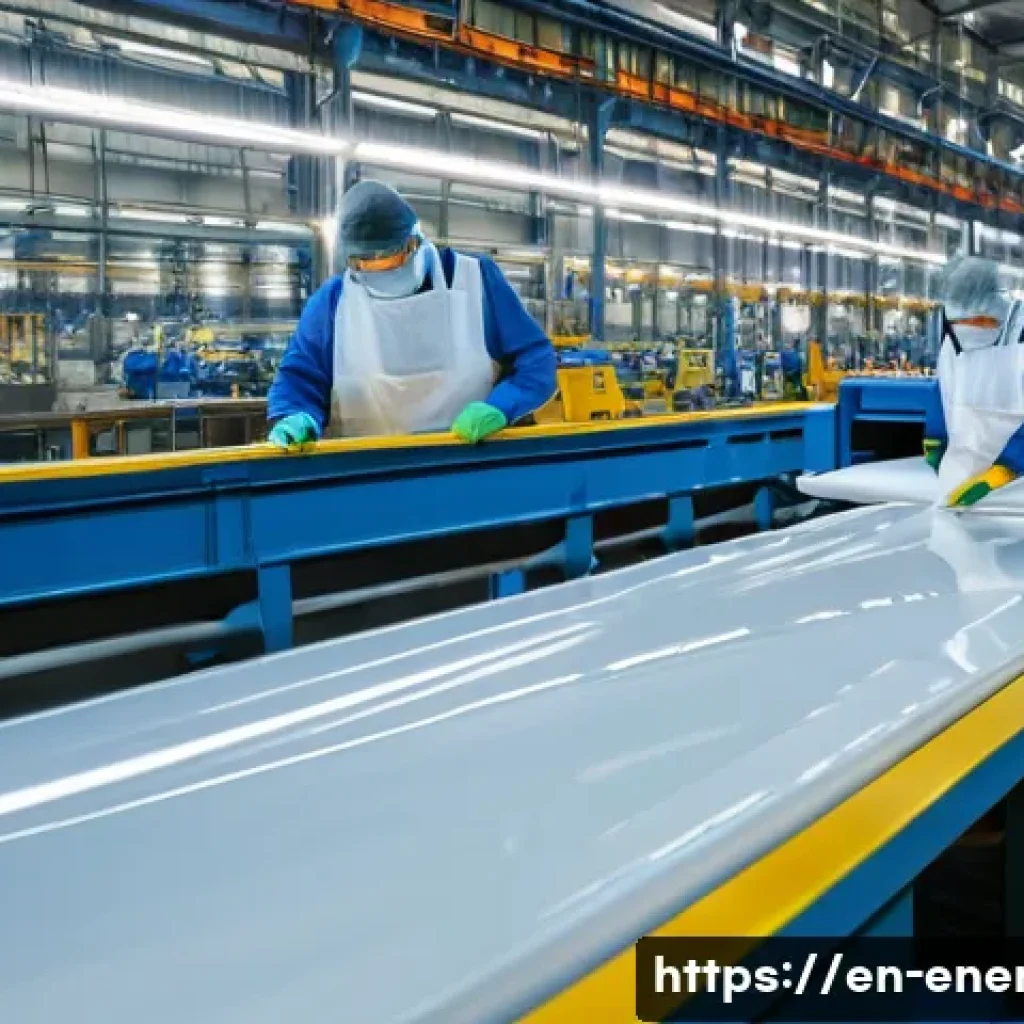
The manufacturing process for wind turbine blades is surprisingly hands-on, even with all the advanced technology involved. Most blades are still made using a process called vacuum infusion or hand lay-up within massive molds. Imagine these huge molds, meticulously prepared, where layers of fabric (fiberglass or carbon fiber) are carefully placed and then infused with a resin. This resin hardens, creating the strong, lightweight composite structure. The precision required is astounding; every layer, every seam, every curve has to be perfect to ensure structural integrity and aerodynamic performance. After the two halves of the blade are formed, they are bonded together with incredible strength. Quality control is paramount at every stage, from material inspection to final aerodynamic profiling. I’ve seen documentaries on this, and the sheer scale of the factories and the dedication of the teams involved are truly impressive. It’s not a fast process, but it results in a product built to endure the elements for decades.
The Art of Airflow: Aerodynamics and Efficiency Secrets
This is where the real magic of wind power happens, in my opinion. It’s one thing to build a strong blade, but it’s another entirely to design one that can coax every last ounce of energy from an invisible force like the wind. Aerodynamics is the unsung hero here, the science that dictates how air flows around objects. For wind turbine blades, this isn’t just about reducing drag; it’s about generating lift, similar to how an airplane wing works, but in reverse. The blades aren’t just pushed by the wind; they generate an aerodynamic force that pulls them forward, causing the rotation. This intricate relationship between the blade’s shape and the moving air is what allows these turbines to operate with such remarkable efficiency, converting kinetic energy into rotational power that we can then turn into electricity. It’s a delicate dance with nature, guided by profound scientific principles.
Whispers of the Wind: Understanding Aerofoil Principles
At the heart of a wind turbine blade’s efficiency is its airfoil shape. Just like an airplane wing, the blade is designed with a curved upper surface and a flatter lower surface. As wind flows over this shape, it has to travel a longer distance over the curved upper surface, causing the air pressure above the blade to decrease. Below, the air travels a shorter distance, maintaining higher pressure. This pressure difference creates lift, or in the case of a wind turbine, thrust, which drives the blade to rotate. But it’s not just one airfoil; the profile changes along the length of the blade, getting progressively thinner and more twisted towards the tip. This ensures that even though different parts of the blade are moving at vastly different speeds, each section is optimized to interact with the wind at its local angle of attack. My experience in understanding this detail truly opened my eyes to the incredible thought process behind these designs. It’s a symphony of subtle changes that maximizes energy capture.
Optimizing the Spin: How Design Maximizes Power
Beyond the basic airfoil, there are countless other design elements that optimize a blade’s power output. For instance, the pitch of the blades – the angle at which they meet the wind – can be adjusted. Modern turbines have sophisticated pitch control systems that can rotate each blade individually, optimizing their angle to the wind speed. In light winds, the blades can be angled to catch more air, while in strong winds, they can be feathered (turned almost parallel to the wind) to prevent damage and regulate power output. This active pitch control is a game-changer for efficiency and turbine longevity. Furthermore, designers constantly tweak parameters like blade chord (width), thickness, and the overall taper from root to tip. Every single variable is scrutinized and optimized through computational fluid dynamics (CFD) simulations, often requiring supercomputers to model the complex airflow. This rigorous optimization process is what allows today’s turbines to achieve energy conversion rates that were once considered impossible.
Pushing the Boundaries: Next-Gen Blade Innovations
If you think wind turbine blades have reached their peak, think again! The world of renewable energy is one of constant innovation, and blade design is no exception. Engineers are always looking for ways to make them even more efficient, more durable, and more adaptable to a wider range of wind conditions. What truly excites me about this field is the willingness to challenge conventional wisdom and explore entirely new concepts. We’re talking about designs that were once relegated to science fiction now becoming a reality. It’s a testament to the fact that when we commit to a greener future, human ingenuity rises to the occasion. These aren’t just minor tweaks; these are fundamental shifts that could redefine how we harness wind power in the coming decades. It’s a thrilling time to be an energy enthusiast!
Flexible Friends and Morphing Marvels: Adaptive Designs
One of the most exciting areas of innovation is the development of flexible and morphing blades. Traditional rigid blades are designed for an optimal wind speed, but wind conditions are rarely constant. Imagine a blade that could change its shape or stiffness in real-time to adapt to varying wind speeds and directions! Researchers are exploring concepts like segmented blades, where sections can independently adjust, or even blades made of materials that can flex and twist dynamically. The idea is to create a “smarter” blade that can continuously optimize its aerodynamic profile, much like a bird adjusts its wings in flight. This could lead to significantly higher energy capture, reduced stress on the turbine structure, and a wider operational window. I’ve personally been following the progress in this area, and while there are significant engineering hurdles, the potential benefits are enormous. It’s like giving the turbine a brain to react to its environment.
Nature’s Blueprint: Biomimicry in Blade Development
Sometimes, the best ideas come from Mother Nature herself. Biomimicry, the practice of imitating nature’s designs and processes to solve human problems, is making significant inroads in blade design. A prime example is the inspiration drawn from whale fins, specifically the tubercles (bumps) on the leading edge of humpback whale flippers. These bumps allow whales to maneuver with incredible agility despite their size, by delaying stall and improving lift. Applying this concept to wind turbine blades has shown promising results in reducing noise, increasing efficiency at lower wind speeds, and even preventing ice build-up. Similarly, researchers are looking at the micro-structures of shark skin to reduce drag, or the resilient structure of reeds to inspire more flexible, yet strong, designs. It’s absolutely fascinating to see how millions of years of evolution can provide such elegant solutions to our modern engineering challenges. My personal experience studying these concepts has convinced me that nature holds many more secrets for us to discover.
Balancing Act: Durability, Longevity, and Environmental Impact
Creating something as massive and complex as a wind turbine blade isn’t just about making it spin efficiently; it’s also about ensuring it can withstand decades of relentless battering from the elements. Think about it: constant wind, rain, extreme temperatures, UV radiation, and even lightning strikes! These blades are truly put through the wringer. So, designing for durability and longevity is paramount. But beyond that, as we move towards a truly sustainable future, we also have to consider the entire lifecycle of these components. What happens when a blade reaches the end of its operational life? This brings us to the crucial discussion of environmental impact and how we can make wind power even greener, from its inception to its decommissioning. It’s a holistic view that challenges engineers to think beyond just performance.
Built to Last: Tackling Wear and Tear
To ensure a long operational life, turbine blades are designed with incredible resilience. This involves meticulous selection of materials, rigorous manufacturing processes, and continuous monitoring. Leading edges, which are particularly susceptible to erosion from rain and dust, often receive special coatings or protective films. Lightning protection systems are integrated into the blades to safely channel strikes away from critical components. Furthermore, advanced sensors are increasingly being embedded within the blades to monitor their structural health in real-time, detecting any potential fatigue or damage before it becomes critical. This proactive approach to maintenance, coupled with robust design, allows many blades to operate for 20 to 30 years or even longer. My own observations from the industry highlight how much effort goes into making these structures not just powerful, but truly enduring against some of the harshest conditions nature can throw at them.
The Green Lifecycle: Sustainability Beyond the Spin
While wind energy is inherently clean during operation, the environmental impact of manufacturing and eventually disposing of the blades is a growing concern. Currently, most wind turbine blades are made from thermoset composites, which are incredibly durable but notoriously difficult to recycle. This means that at the end of their lifespan, many blades end up in landfills. However, significant research is underway to address this challenge. Companies are exploring new thermoplastic composites that can be more easily recycled, as well as developing innovative methods to recover valuable fibers from existing thermoset blades. There are also efforts to reuse old blades in other applications, such as pedestrian bridges or playground equipment. It truly feels like we are on the cusp of a breakthrough here, and I’m optimistic that the industry will find scalable, sustainable solutions for blade recycling, ensuring that the entire lifecycle of wind power is as green as the energy it produces.
From Blueprint to Breeze: The Design Process Unveiled
Ever wondered what it takes to get one of these magnificent blades from a concept on a computer screen to a physical object gracefully spinning in the wind? It’s a journey filled with intense research, complex calculations, and meticulous testing. It’s not just about a bright idea; it’s about a systematic process that combines advanced physics, material science, and computational power with real-world engineering challenges. This iterative process of design, simulation, and validation is what ensures that every blade produced is not only efficient but also safe and reliable. It’s truly a testament to the collaborative efforts of scientists, engineers, and manufacturers worldwide, all driven by the common goal of advancing renewable energy technology. From my perspective, understanding this rigorous process makes me appreciate the final product even more.
The Drawing Board: Where Ideas Take Flight
The design process typically kicks off with extensive theoretical modeling and computational fluid dynamics (CFD) simulations. Engineers use powerful software to simulate how different blade shapes and materials will interact with various wind conditions. This allows them to virtually test countless configurations without the need for expensive physical prototypes. Factors like desired power output, expected wind regimes at the installation site, and manufacturing constraints all feed into these initial designs. Every curve, every twist, every thickness is optimized to maximize aerodynamic performance and structural integrity. This phase also includes detailed material selection, where the properties of various composites are analyzed to find the optimal balance of strength, weight, and cost. It’s a high-stakes game of prediction and optimization, where every detail matters. I find it fascinating how much can be achieved and refined digitally before a single piece of material is even cut.
Testing the Limits: Simulations and Real-World Trials
Once a promising design emerges from the virtual world, it moves into the rigorous testing phase. This often begins with scaled-down models being tested in wind tunnels to validate the aerodynamic predictions. For full-scale blades, static and dynamic fatigue tests are conducted in specialized test facilities. Imagine a massive blade being clamped down and then repeatedly bent and twisted thousands, even millions of times, to simulate decades of real-world operation! These tests push the blades to their absolute limits, far beyond what they would typically experience in the field, to ensure they can withstand extreme conditions. This data is crucial for certifying the blades and building confidence in their long-term performance. My own observations have shown that this comprehensive testing regime is absolutely non-negotiable, as it’s the final verification that all the theoretical work holds up in the harsh reality of operational demands. It’s a critical step to ensure safety and reliability.
The Future’s Edge: What’s Next for Wind Blade Technology
The journey of wind turbine blade innovation is far from over; in fact, I’d argue we’re just getting started! As global demand for clean energy continues to skyrocket, the pressure is on to develop even more powerful, more efficient, and more sustainable wind technologies. This means constantly pushing the boundaries of what’s possible with blade design, materials, and manufacturing processes. We’re seeing exciting trends that promise to redefine the very landscape of wind power. From radical new shapes to entirely new operational philosophies, the future holds incredible potential. It’s an exhilarating time to be witnessing these advancements firsthand, and it leaves me incredibly optimistic about the role wind energy will play in shaping our greener tomorrow. These aren’t just incremental improvements; they’re leaps forward that will change the game.
Taller, Lighter, Smarter: The Ongoing Quest for Perfection
One clear trend is the continued drive towards longer blades and taller turbines. Higher altitudes generally mean stronger, more consistent winds, which translates to greater energy capture. However, simply making blades longer brings challenges related to weight, structural integrity, and logistical hurdles for transportation. This is where advanced materials like hybrid carbon fiber composites become crucial, allowing for lighter yet stronger designs. Furthermore, the push for “smarter” blades is accelerating. This includes integrated sensors for real-time performance monitoring, active flow control systems that can adapt to changing wind conditions using flaps or jets, and even self-healing materials that could repair minor damage automatically. The goal is to create blades that are not only efficient but also intelligent, minimizing downtime and maximizing energy production throughout their lifespan. It’s a relentless pursuit of perfection, driven by the immense potential of wind power.
Recycling Challenges and Circular Economy Dreams
As the first generation of large-scale wind turbines approaches the end of its operational life, the challenge of blade disposal and recycling has become a critical focus for the industry. While we’ve discussed the difficulties with thermoset composites, the future is looking much brighter. The development of advanced thermoplastic resins that can be melted down and re-processed is a major step forward, promising a true circular economy for wind turbine blades. Beyond material innovation, companies are also exploring mechanical recycling methods to separate fibers and resins, or chemical processes to break down composites into their original components for reuse. Furthermore, creative reuse applications, such as utilizing blade sections for architectural elements or urban furniture, are gaining traction. My personal hope is that within the next decade, we’ll see a fully established and economically viable recycling infrastructure for wind turbine blades, ensuring that this fantastic source of clean energy is truly sustainable from cradle to grave. It’s an ambitious goal, but one that is absolutely essential for our planet.
| Blade Material Type | Key Advantages | Key Disadvantages | Common Applications |
|---|---|---|---|
| Fiberglass Composite | Cost-effective, good strength-to-weight, widely used. | Lower stiffness than carbon fiber, difficult to recycle. | Most current onshore and smaller offshore blades. |
| Carbon Fiber Composite | High strength & stiffness, lighter weight, enables longer blades. | Higher cost, more specialized manufacturing process. | Larger offshore blades, next-gen high-performance turbines. |
| Hybrid Composites | Balances cost & performance, combines benefits of both. | Complex manufacturing, variable properties based on ratio. | Emerging standard for many large modern blades. |
| Thermoplastic Composites | Potentially recyclable, reusable, lighter. | Still in development, higher initial material cost, less mature technology. | Future blades, circular economy projects. |
글을 마치며
Whew, what a journey through the incredible world of wind turbine blades! I hope this deep dive has opened your eyes, just as it did mine, to the sheer brilliance behind these unsung heroes of green energy. It’s truly inspiring to see how human ingenuity, combined with cutting-edge science, crafts these majestic structures that harness nature’s power so elegantly. Thinking about their complex anatomy, the advanced materials, and the constant innovation, it’s clear these aren’t just pieces of machinery; they’re a testament to our collective commitment to a sustainable future. Every spin is a step closer to a cleaner planet, and that, my friends, is something truly worth celebrating.
알아두면 쓸모 있는 정보
1. Regular Maintenance is Key: Just like your car needs oil changes, wind turbines thrive on consistent maintenance. Regular checks ensure optimal performance and extend their impressive lifespan, keeping that clean energy flowing without a hitch.
2. Location, Location, Location: The efficiency of a wind turbine isn’t just about its design; it’s heavily influenced by where it’s situated. Areas with consistent, strong wind patterns are chosen meticulously to maximize energy capture.
3. Size Matters (Up to a Point): Generally, longer blades sweep a larger area and capture more wind. However, there’s a delicate balance. Engineers carefully consider factors like transportation, manufacturing costs, and structural integrity when determining the ideal blade length for a project.
4. Aerodynamics for the Win: The magic isn’t just in the size or material, but in the subtle twist and airfoil shape of the blade. This complex aerodynamic design is what allows them to generate lift, efficiently converting wind into rotational energy.
5. Recycling Efforts are Growing: While disposing of old blades has been a challenge, the industry is making huge strides in developing recyclable materials and innovative methods for repurposing old blades. The goal is a truly circular economy for wind power, which is incredibly exciting to witness.
중요 사항 정리
In essence, modern wind turbine blades are far more than simple propellers; they are highly sophisticated engineering marvels. Their design involves a deep understanding of aerodynamics, advanced material science for durability and lightness, and innovative manufacturing techniques. The ongoing evolution focuses on enhancing efficiency through adaptive designs and biomimicry, while also tackling crucial environmental concerns like recycling. This continuous innovation ensures wind energy remains a cornerstone of our global shift towards a sustainable and clean energy future.
Frequently Asked Questions (FAQ) 📖
Q: What exactly are these incredible wind turbine blades made of, and why is that important?
A: Oh, this is such a great question, and one I get asked all the time! You know, when I first started learning about wind energy, I just assumed they were made of some kind of super-strong metal, like an airplane wing.
But nope, it’s far more clever than that! Modern wind turbine blades are truly engineering marvels, primarily crafted from advanced composite materials.
Think of it like a high-tech sandwich! The most common “meat” of that sandwich is often fiberglass-reinforced plastic (FRP), bonded together with resins like epoxy or polyester.
For those absolutely massive blades we see dominating the horizons, especially offshore, engineers often bring in carbon fiber. It’s like the super-strength boost, making the blades stiffer and even stronger without adding much weight.
And nestled inside, you’ll frequently find balsa wood, believe it or not, acting as a lightweight, structural core material. Why does all this matter?
Well, it’s a delicate balance, isn’t it? These blades have to be incredibly lightweight so they can spin gracefully with even a gentle breeze, but they also need to be ridiculously strong to endure decades of relentless punishment from high winds, salty air, torrential rain, extreme temperatures, and yes, even lightning strikes!
Using these composite materials allows for that perfect sweet spot: maximum strength with minimal weight. Lighter blades mean the turbine doesn’t need as much energy just to get going, which boosts efficiency.
Plus, they put less stress on the entire turbine structure, meaning less wear and tear, and ultimately, a longer life for the whole system. And from a practical standpoint, lighter components are just easier to transport and install, which helps keep costs down.
It’s a total win-win in my book!
Q: How are engineers making blades even more efficient to capture every whisper of wind?
A: This is where things get really fascinating for me because it’s a constant quest for perfection, right? Engineers are like modern-day alchemists, always refining and innovating to squeeze every last drop of energy from the wind.
One of the biggest game-changers is in aerodynamic design. They’re not just making a bigger paddle; they’re sculpting these blades with incredibly precise airfoil shapes, just like an airplane wing, but optimized for capturing wind.
The goal is to maximize “lift” – the force that pushes the blade and makes it turn – while minimizing “drag” – the resistance that slows it down. We’re talking about designs that achieve really high lift-to-drag ratios.
I’ve personally been following the developments with features like vortex generators or even serrated tips on the blades. They sound wild, but these little additions actually help manage the airflow, reduce noise, and ensure smoother operation, meaning more energy captured!
And get this: they’re also building “smart” into the blades themselves! We’re seeing more and more blades that integrate sensors and IoT (Internet of Things) technology.
It’s almost like the blades have their own little brains. These smart blades can monitor their own health in real-time, detecting tiny cracks or wear before they become big problems.
Even cooler, some can actually adjust their pitch – the angle at which they meet the wind – in real-time. So, if the wind changes, the blade subtly adapts, ensuring optimal performance and minimizing stress.
But honestly, what truly blows my mind is biomimicry. This is where engineers look to nature for inspiration. They’ve studied the bumps on a humpback whale’s fins (called tubercles) to design blades with better lift and reduced drag.
Think about owls, those silent predators – their wings have serrated leading edges and porous trailing edges that help them fly so quietly. Engineers are applying similar concepts to reduce the aerodynamic noise of turbine blades, which is a big deal for communities near wind farms.
Even shark fins have provided insights into improving lift and cutting drag. It’s proof that nature has already perfected so much, and we’re just learning to apply those lessons!
Q: What mind-blowing innovations can we expect to see in wind turbine blade design in the near future?
A: Oh, if you think what we’ve seen so far is impressive, just wait! The future of wind turbine blades is looking incredibly bright, and frankly, I’m buzzing with excitement for what’s coming next.
We’re going to see even more revolutionary advanced materials. Beyond the fiberglass and carbon fiber we know, researchers are exploring things like carbon nanotubes and graphene to create composites that are not just stronger and lighter, but also more resistant to erosion and fatigue.
Imagine blades that are virtually indestructible, requiring even less maintenance! There’s also a huge push towards sustainability, with efforts to develop natural fibers like flax or hemp, combined with bio-based resins, and even thermoplastic resins that could make blades fully recyclable at the end of their long life.
That’s a game-changer for environmental impact. Another innovation I’m keeping a close eye on is morphing blades. Picture this: a blade that can actually change its shape – its twist, its curve, its chord length – on the fly, just like a bird adjusting its wing.
This incredible adaptability would allow turbines to constantly optimize their performance for whatever the wind is doing, from a gentle breeze to a howling gale, maximizing energy capture and dramatically reducing stress on the entire system.
Some concepts even involve “shape memory alloys” that could enable this amazing transformation. And let’s talk about sheer scale and clever construction!
The trend of longer blades isn’t slowing down – we’re talking about blades that could be well over 100 meters long for future offshore giants. To build and transport these colossal structures, segmented designs are becoming crucial, allowing them to be assembled on-site.
Paired with this, we’ll see much more automated manufacturing, utilizing robotics and even advanced 3D printing techniques for core structures to ensure incredible precision, consistency, and cost-efficiency in production.
It’s like building a high-tech LEGO set, but on an epic scale, all powered by our incredible drive for clean energy! The future is truly spinning towards us, and it looks fantastic.